Sunday, September 25, 2011

The Language of Music

"It's easy to play any musical instrument: all you have to do is touch the right key at the right time and the instrument will play itself."- J.S. Bach


Wade began music therapy with a Kindermusik class when he was 3 years old. After that class was completed, we continued with one-on-one music therapy over the summer. We have kept on with music therapy ever since except for a break this summer. He now has music therapy twice a week with two different music therapists.


One of the first benefits of music therapy that I saw in Wade was an improvement in rhythm. Because rhythm is included in the backbone of speech, as a child's rhythm improves, so also does his vocabulary.  I had thought that it would take much hand-over-hand tutoring to accomplish the art of staying in rhythm, but Wade was soon tapping to the beat, inspired by observing and imitating (what seemed to be) playful games with the music therapist. And along with a better sense of rhythm came new words and longer sentences.


Another huge benefit of music therapy for Wade is that the music therapist is able to take any of the child's other pt, ot, or speech goals and incorporate them into the music. Because music has always been a passion for Wade, it provides the key to unlock the doors of fundamental learning by seducing his attention and holding it. Music becomes an invisible schoolhouse in a natural setting enabling him to learn and meet his goals without ever realizing that he is working. Music has helped to stretch his attention span until now he is able to put small puzzles together independently and to complete tracing pages mostly on his own. Days of the week, months of the year, weather, abc's, and numbers have all been learned through music. When he was younger, music was the best way to teach him sign language. Additionally, isolating problematic letter sounds and putting them to music also helped to make him aware of remembering to say them the correct way.

Music therapy's incorporation of movement and learning corresponds well to the explosion of current research on the connection between movement and cognition, whose findings imply that education should involve movement to enhance learning. When Wade manipulates learning mediums with his hands, or moves with purpose related to mental activity, he processes and retains new information much better. It stretches his ability to complete sequencing activities correctly and aids in the process of permanently downloading new vocabulary into his brain.

When Wade turned 4, the music therapist began to do adaptive piano along with the other mt activities. Once again, I have been amazed at the performance of cognitive skills this has showcased that I might otherwise have missed. This is a great picture of order in the environment creating order in the mind. Now, at almost 5, Wade is playing simple songs on the piano (by reading color-coded music) and is isolating the appropriate fingers to use with the coordinating keys. He is also best able to follow a sequence when it involves the keyboard, leading me to believe that music has enhanced his listening skills and helped him to focus with much greater clarity. Research again backs up this theory by showing how brains can organize themselves in response to sensory input. An interesting study was done in 1980 by M. C. Piper and M. K. Ramsay on the effect of early home environment on the mental development of infants who had Down syndrome. In this study, organization in the home was a direct factor in predicting the IQ of these children.

More recent research reported by Oliver Sacks in Musicophilia reveals the fact that a professional musician's occupation can be identified by simply seeing a picture of his brain. In other words, the study of music has given him more connections between the hemispheres of his brain than most other people have. If that is true, then it seems likely to me that a well-ordered introduction and guidance to music beginning when my child is very young will have long-lasting impact on his cognitive development throughout life.

It is a passion worth cultivating.


* For further information on music and Down syndrome read this article written by Stephanie Bennet in 2009 entitled "Music may improve verbal memory--Implications for children with Down syndrome".

* And do take a look at this clip about Bryann Burgess who will be singing the national anthem for our Buddy Walk in a couple of weeks. Bryann is currently a junior at the University of South Carolina where she is participating in their non-degree program, living on campus, and attending classes on her own without a tutor. Her passion for teaching and her talent for music come together in the work she is doing in assisting with a Kindermusik class.


Tuesday, September 20, 2011

Hello, My Name is Wade


I just had a birthday.  I am five years old.

When I was born, my mom wondered what I would be like when I was five.

I could have told her she didn't need to worry.

Because now that I'm five I can do lots of things.

Take a look.


Ah, Mom! You don't need to worry about me!

I can even take pictures with your camera.


Oooops!

Oh well, a fella can't be good at everything.

Monday, September 12, 2011

I Am Russell's Voice

There's an elephant in the room.  I've sort of been avoiding him.  It seems that he's talked about, too often, with a sense of anger.

But anger isn't needed.  And Russell has a voice who has spoken gently and well.

Listen.


Sunday, September 04, 2011

The Adventure of Sleeping


So, I tuck Wade in bed--he's all agreeable and smiling good night.  But when I check on him a while later, I find this.......mummy bear sleeping on three pillows and lovingly snuggled in the blanket.  Where is Wade?


Ah!  There he is, in his brother's bed where he'd much  rather sleep.


He sleeps so creatively that I just can't get done taking pictures.


There's no adventure like a nap (at least when your name is Wade). 

Sunday, August 28, 2011

The Book Nook

"Any way, because we are readers, we don't have to wait for some communications executive to decide what we should think about next--and how we should think about it.  We can fill our heads with anything from aardvarks to zucchinis--at any time of night or day."--Kurt Vonnegut


We all confess to being book addicts at our house.  The one rule that applies is No Reading at the Table When Everyone Is Present.  But reading at all other times is fair game.


We read together.


We read apart.


We read until we fall asleep.

A few of us have even been known to snatch a few words at stoplights (shhhhh, don't tell).  

And part of the fun of reading is discussing and sharing a book with someone else.

So here are a few Good Reads.


The Hundred Dresses by Eleanor Estes

We love all books by Eleanor Estes, because she happens to have remembered perfectly what it is to be a child with the delightful innocence of fresh perspectives.  But The Hundred Dresses also captures the potential of children to be cruel to those who are different.  Estes draws a thoughtful picture through the conscience of one little girl who can imagine what it must feel like to be alone and ridiculed.  


And in the end we learned the beauty of a mind that speaks a different language.  This is a wonderful story to read aloud and discuss with your children.


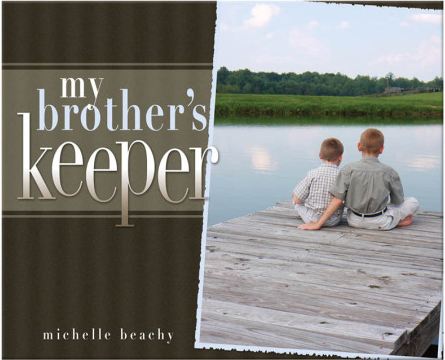
My Brother's Keeper by Michelle Beachy

Along the same theme is the touching true story of a boy's love for his little brother who was born with a disability.  Told from the viewpoint of Andrew, the older brother, we learn much of how a family works together in times of need and how love is big enough to stretch to fit any situation.  It's hard to read this tender story with dry eyes.


Healing the Hardware of the Soul by Daniel Amen

In the past few years, I've particularly enjoyed reading books on the brain and how it works...or doesn't.  Dr. Amen is a Christian psychiatrist and brain imaging specialist.  His staunch belief in God makes his approach to brain function very refreshing to me.  Dr. Amen uses a brain imaging technique called SPECT to picture brain function and then to tailor individual programs to fit particular needs.  

Did you know that over time our brains change by what we feed into them?  This is both a frightening and an encouraging thought.

"When the brain is healthy, we are compassionate, thoughtful, loving, relaxed, and goal directed, and when the brain is sick or damaged we are unfeeling, impulsive, angry, tense, and unfocused, and it is very hard for our soul and our relationship with God to be at peace."

Dr. Amen tells about a group of scientists who, in 1997, seemed to have discovered a "God module" in the brain.  "The scientists located a circuit of nerves in the temporal lobes that became electrically active when the patients thought about God.  The scientists said that initial results suggested that the phenomenon of religious belief could be 'hard-wired' into the brain."

Doesn't it make sense, said Dr. Amen, that the God Who made us would have created inside us a place especially designed for communicating with Him?

In all of my reading about the brain, I find that thought the most lovely of all.

The brain is the violin and the soul is the violinist.  They both need to work together to make beautiful music. --Father Charles Ava


Sunday, August 21, 2011

Goal Accomplished


Wade has a marvelous lack of fear which is a wonderful thing to behold in some ways, and a terrifying thing to behold in other ways. We always carry with us the knowledge that his absence of fear must of necessity make us more aware, more careful than we would otherwise need to be.  Therefore, we must be proactive in equipping him with the skills of survival.

This summer's survival techniques involved swimming.  And he did it!  He learned to swim!!!

And I still can't take my eyes off him for a minute.  He thinks he can do everything his brothers do.  Terrifying.


Sunday, August 14, 2011

A Bit of Love, Smeared with Paint


"I love you, Mama," he said, right before he drove his trike into my full paint tray.

And then he waited patiently while I scrubbed the paint off him and his vehicle and me and the floor and...........oh well, I love you too, Wade.


Monday, August 08, 2011

Randall, Christopher, and Wade, Inc.


A little smiling, a little fighting, a little loving, a little smiting.......ah, that's the life!


Randall writes the minutes.  (Secretaries everywhere....take note.)


Christopher follows the directions.  (Do you think he was glad to get to the last one?)


Wade thinks it's all "thbbbbbbbbbt".

Monday, August 01, 2011

Where Is Wade?


Wade loves to play Hide and Seek.  Randall and Christopher hide and he tries to find them as they "peep" at him.  He needs practice in discriminating sound location.

He also has just begun to consistently answer me when I call:  "Where are you, Wade?".   He says, "Right here!" which forces me to practice my ability to discriminate sound location.

So now we are working on a modified version of Hide and Seek in which he has to use words to describe his location to me.

Where is Wade?


Today in the middle of Modified Hide and Seek, a science lesson ran in the door.


A baby lizard---isn't he darling?


Back to hide and seek.

Where is the lizard?


Oh noooooooooooo!!!!!!!